How Earth Observation, open-source intelligence and AI can contribute to a more coherent response to maritime incidents.
When information about a maritime incident arrives through separate channels, the work of connecting it falls to the analyst. A satellite observation, an AIS vessel-tracking record and an open-source report may each describe a different aspect of the same event. Understanding how these observations relate to one another is a central research challenge for maritime intelligence.
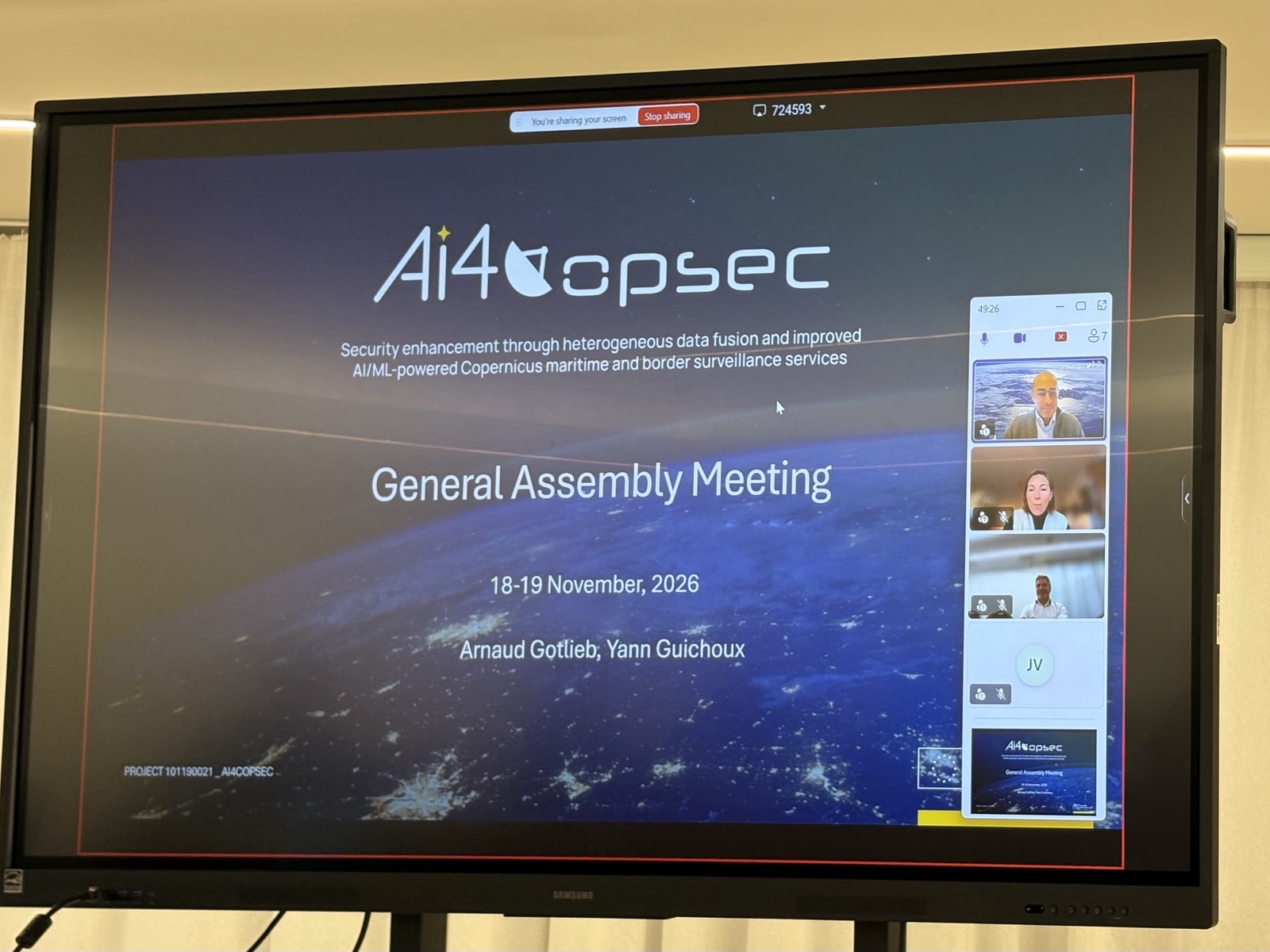
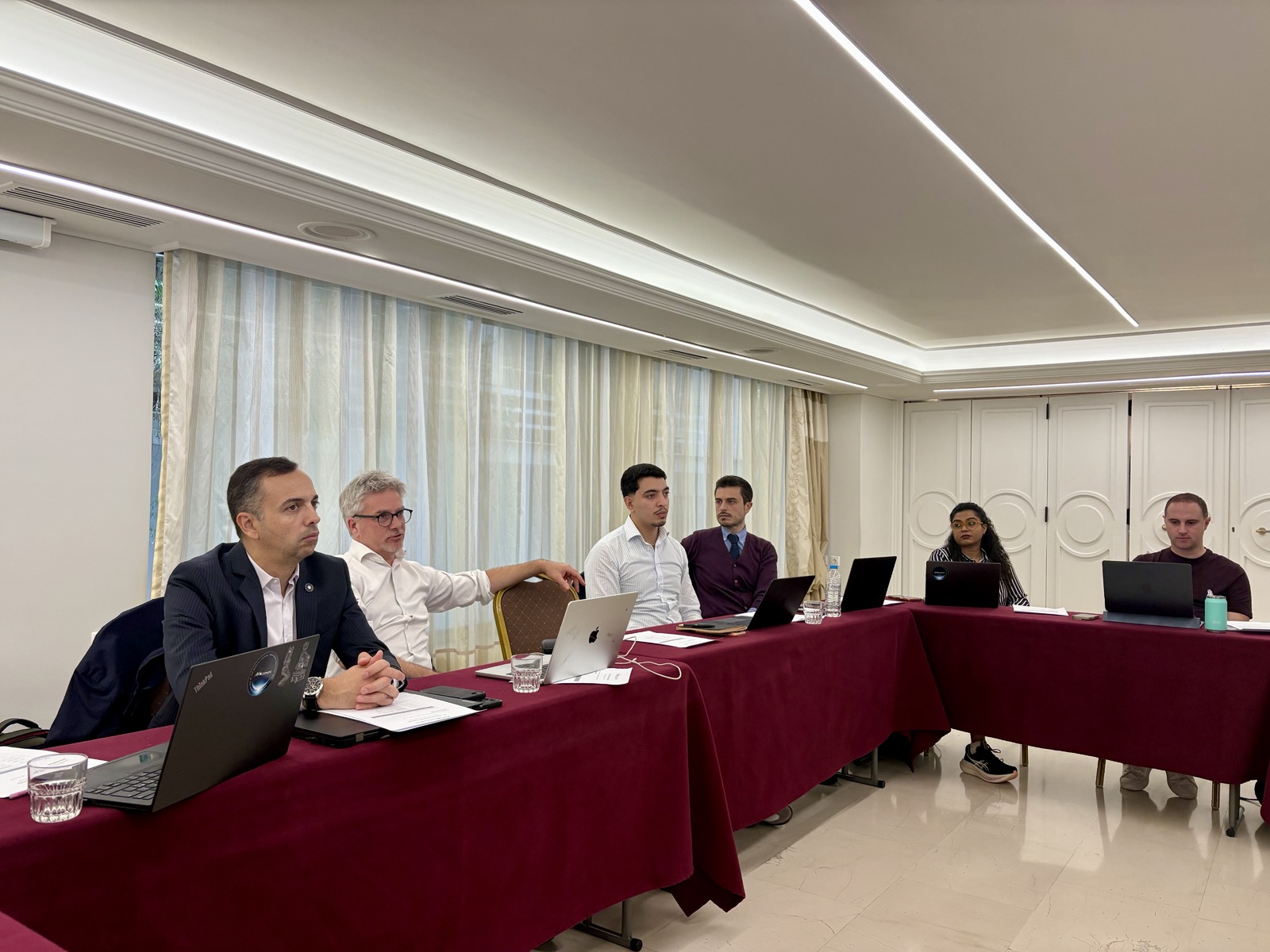
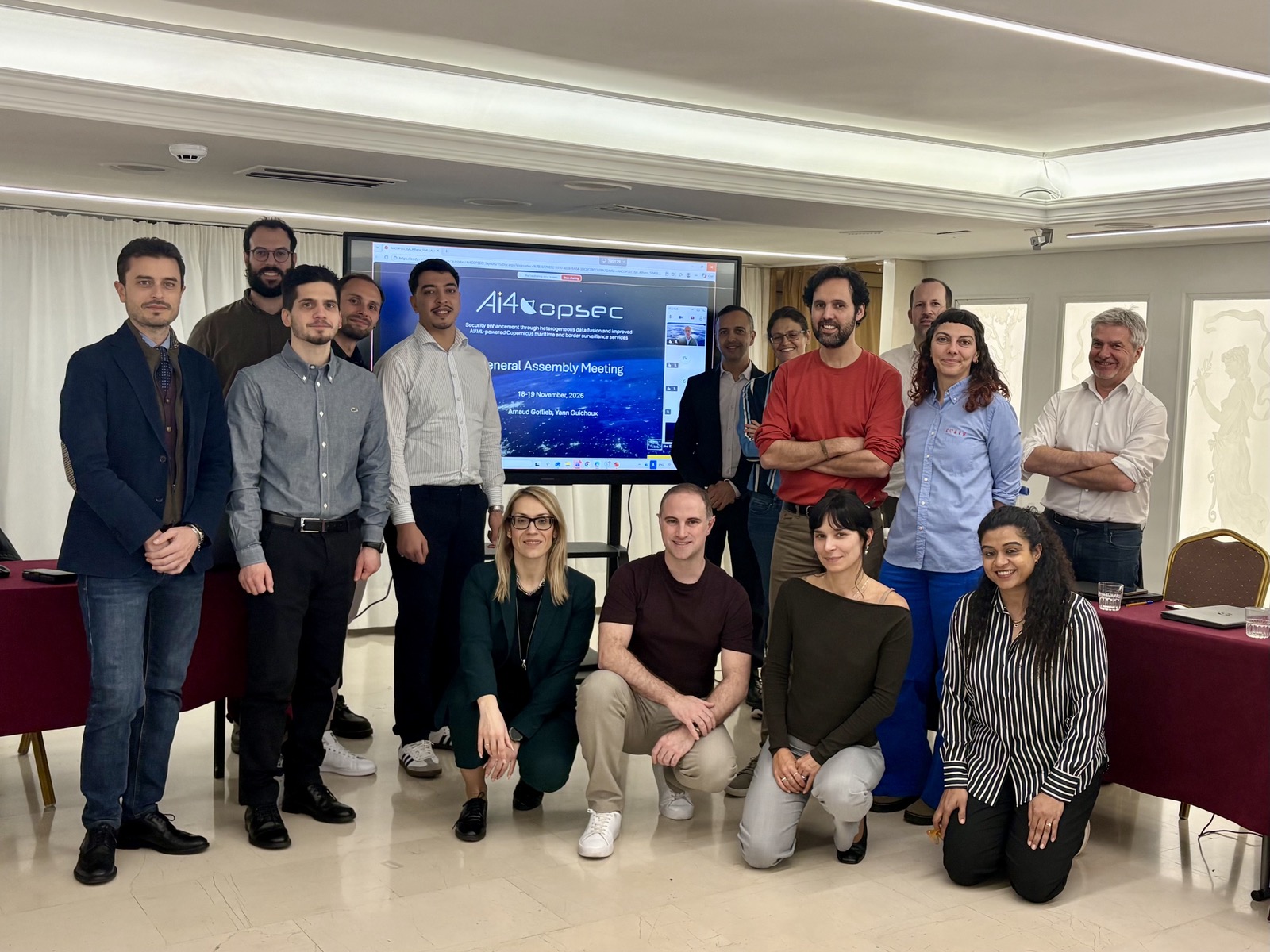
On 18-19 November 2026, the AI4COPSEC consortium met in Athens, Greece, for its 4th General Assembly. The discussions addressed technical integration, the next stages of development, and the role of AI transparency, ethics and data protection in maritime security and crisis management.
The research challenge: connecting heterogeneous maritime observations
Maritime monitoring draws on sources with different characteristics:
- Optical satellite imagery provides visual observations of the sea surface;
- Synthetic Aperture Radar (SAR) provides radar-based observations;
- Thermal sensors capture temperature-related information;
- Automatic Identification System (AIS) transmissions provide information about reporting vessels.
Open-source intelligence (OSINT) adds another dimension through publicly available reporting and contextual information.
These sources differ in spatial coverage, timing, resolution and the nature of the evidence they provide. A report may indicate that an incident has occurred without establishing its precise location, while a satellite observation may reveal a feature without establishing its cause. Interpreting either source independently can leave important questions unresolved.
AI4COPSEC investigates how heterogeneous information can be correlated around individual incidents. The research challenge extends beyond technical interoperability: it concerns how observations can be associated with an event, how inconsistencies can be interpreted, and how the resulting intelligence can support an operational assessment.
OSINT as a starting point for Earth Observation analysis
An important aspect of the project is the exploration of OSINT as an early indication of an event, rather than solely as contextual information added after satellite analysis.
Consider an illustrative workflow in which publicly available reporting indicates a potential maritime incident. The report provides an initial basis for identifying relevant Earth Observation (EO) data and other available observations. AI-assisted analysis could then help establish relationships between those sources, identify relevant patterns and consolidate findings for analyst review.
The value of this approach depends on the quality of the initial reporting, the availability and timing of satellite observations, and the reliability of the associations made between sources. An early indication does not establish that an incident has occurred, and agreement between sources does not automatically constitute independent corroboration.
The research therefore raises a practical question: under what conditions can combining OSINT and EO reduce the interval between an initial indication and an assessment that an operational team can use? Answering this requires validation rather than assuming that integration alone produces better decisions.
Four scenarios for operational validation
The consortium’s next stage includes developing an integrated demonstration application across four maritime security and crisis management scenarios. Each presents a distinct information and assessment challenge.
- Irregular migration. Investigating how the integration of OSINT and Earth Observation can support the early detection of migrants while they are still on the coast of the country of departure, allowing first responders to prepare for potential rescue operations.
- Search and rescue. Exploring how complementary observations could help responders build a clearer understanding of a developing situation, including the drifting of vessels or people at sea.
- Illegal fishing and dark vessel detection. Examining relationships between satellite detections and vessel-tracking information to identify activity that warrants further assessment. The absence of an AIS transmission is not, by itself, evidence of illegal activity.
- Oil spill detection. Investigating how satellite imagery and complementary information can support the identification, assessment and monitoring of potential marine pollution incidents and drifting patterns.
The demonstrations are intended to help evaluate technical integration and collect feedback from operational end users. Their importance lies in examining whether the combined intelligence is relevant, interpretable and useful in the context of each scenario.
Hozint’s contribution: making fused intelligence interpretable
As a consortium partner, Hozint contributes expertise in automated OSINT collection, AI-powered event detection and intelligence dissemination. Our work within AI4COPSEC focuses particularly on the irregular migration use case.
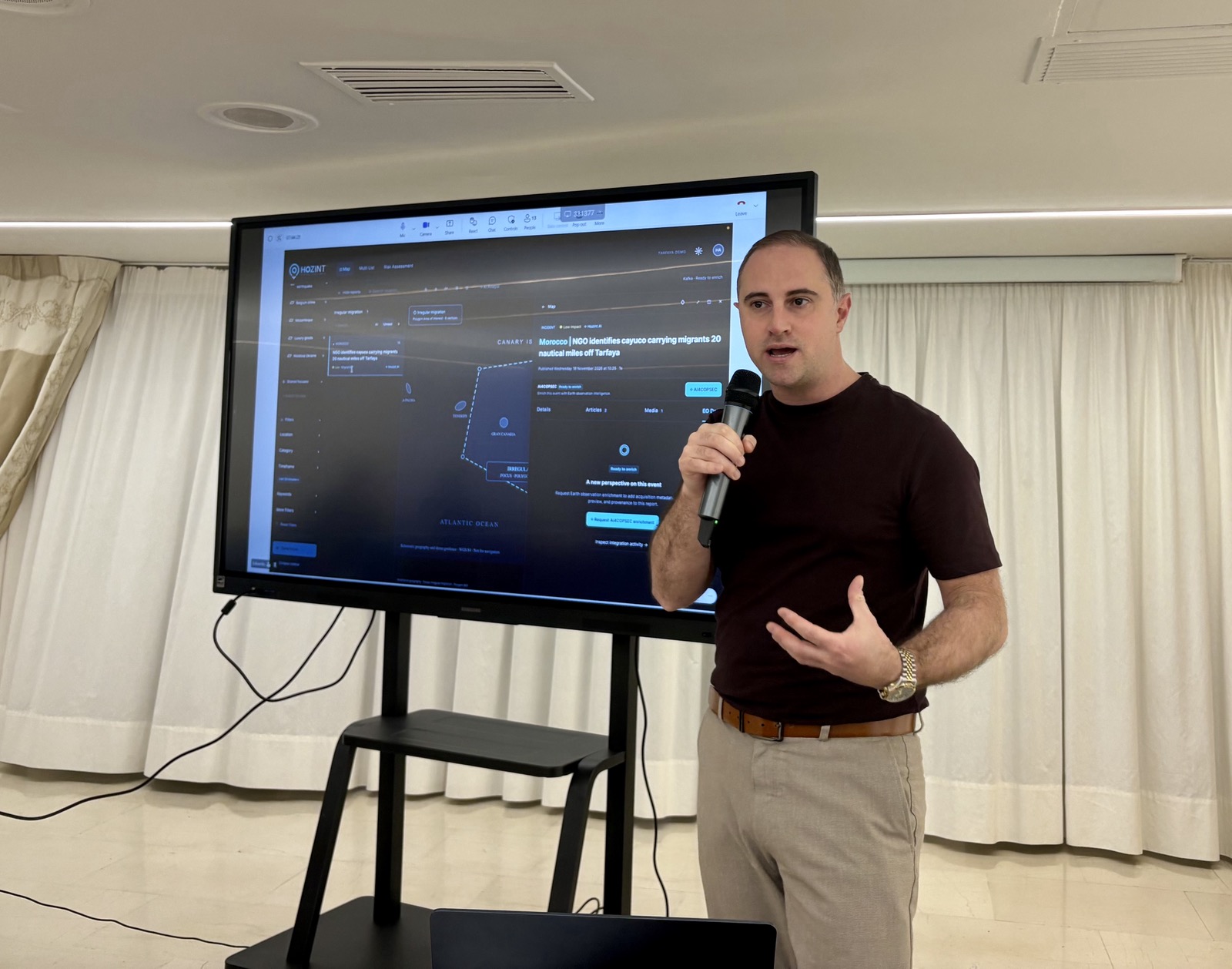
The planned integration builds on Hozint’s existing incident monitoring and geospatial visualisation capabilities. The aim is to make intelligence products derived from OSINT and EO accessible within a shared environment, allowing practitioners to examine related information without having to reconstruct the entire incident picture across separate tools.
For operational end users, including practitioners from the Spanish Guardia Civil and the European Union Satellite Centre (SatCen), the proposed approach provides a basis for evaluating how fused intelligence might fit into their assessment workflows.
This question also matters beyond public-sector maritime surveillance. Corporate security, risk and operations teams with maritime exposure must assess whether emerging events are relevant to their operations, what remains uncertain and whether further investigation is warranted. Hozint’s existing monitoring capabilities address the open-source intelligence component of that challenge; the AI4COPSEC integration remains research in development.
Trustworthy AI is part of the research problem
The Athens General Assembly placed particular emphasis on transparency, ethics and data protection. In maritime intelligence, these considerations affect how information can be interpreted and used, especially when AI-supported assessments concern vulnerable people.
An intelligence product needs to allow practitioners to distinguish observations from analytical inferences, understand the limitations of the underlying evidence and exercise appropriate human oversight. Data quality, explainability and the handling of potentially sensitive information are therefore integral to the development process, not separate from it.
The objective is to investigate how AI-supported intelligence can remain understandable and accountable within operational workflows while taking European regulatory requirements and data protection principles into consideration. This is a design objective, rather than a claim of established compliance or demonstrated performance.
From integration to operational relevance
The next stage of AI4COPSEC will bring the research components together in an integrated demonstration. For Hozint, this is an opportunity to examine how open-source event detection and geospatial intelligence can contribute to a wider understanding of maritime incidents.
The broader question is one we encounter across security intelligence: how can teams move from fragmented information to an assessment that supports their next decision without losing sight of the limitations of the evidence?
If your team monitors emerging security events affecting maritime operations, we welcome a conversation about your current intelligence workflows and the role open-source monitoring could play in them.
Explore Hozint’s risk intelligence capabilities at www.hozint.com.
Learn more about the research project at ai4copsec.eu.