Turn information
into actionable intelligence
Hozint combines near-real-time AI alerts, analyst-verified reports and AI-powered analysis in one platform. Spot emerging threats sooner, build confidence with human verification, and let AI Analyst turn reports into intelligence briefings.
Signals become intelligence.
The speed of AI. The confidence of human verification. Intelligence delivered where you need it.
- 01
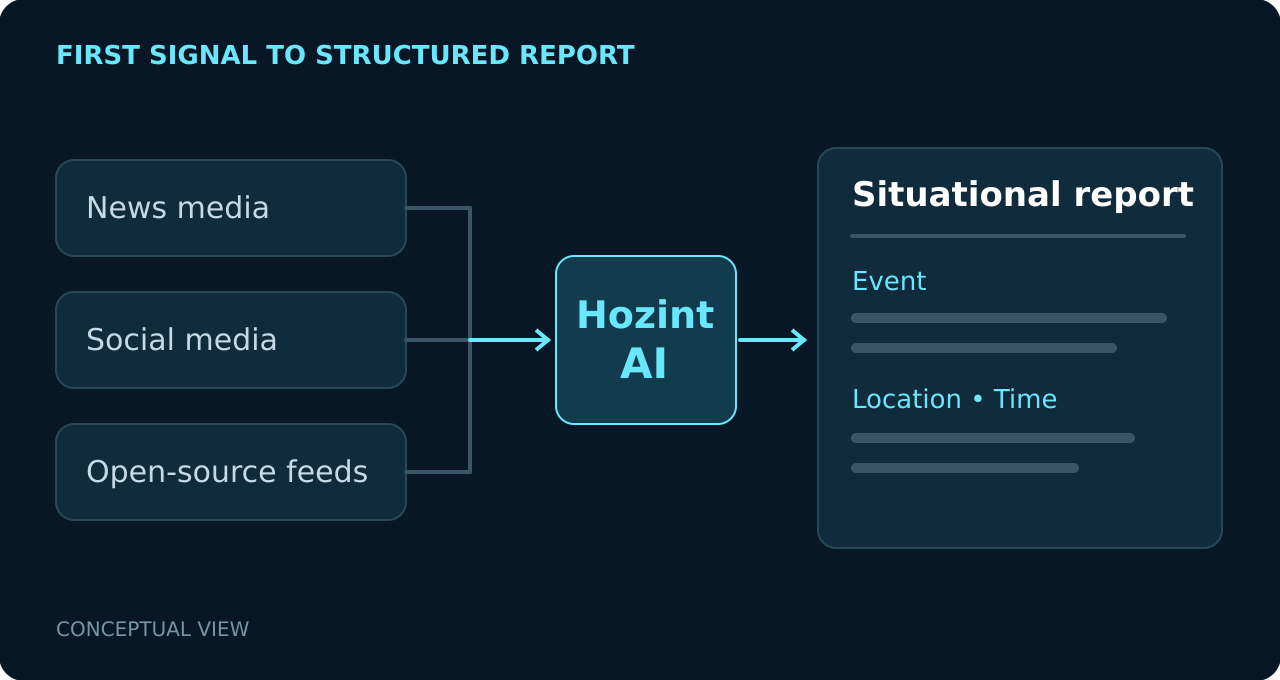
Hozint AI monitors open sources and generates near-real-time alerts.
News mediaSocial mediaOpen-source feedsHozint AI alerts - 02
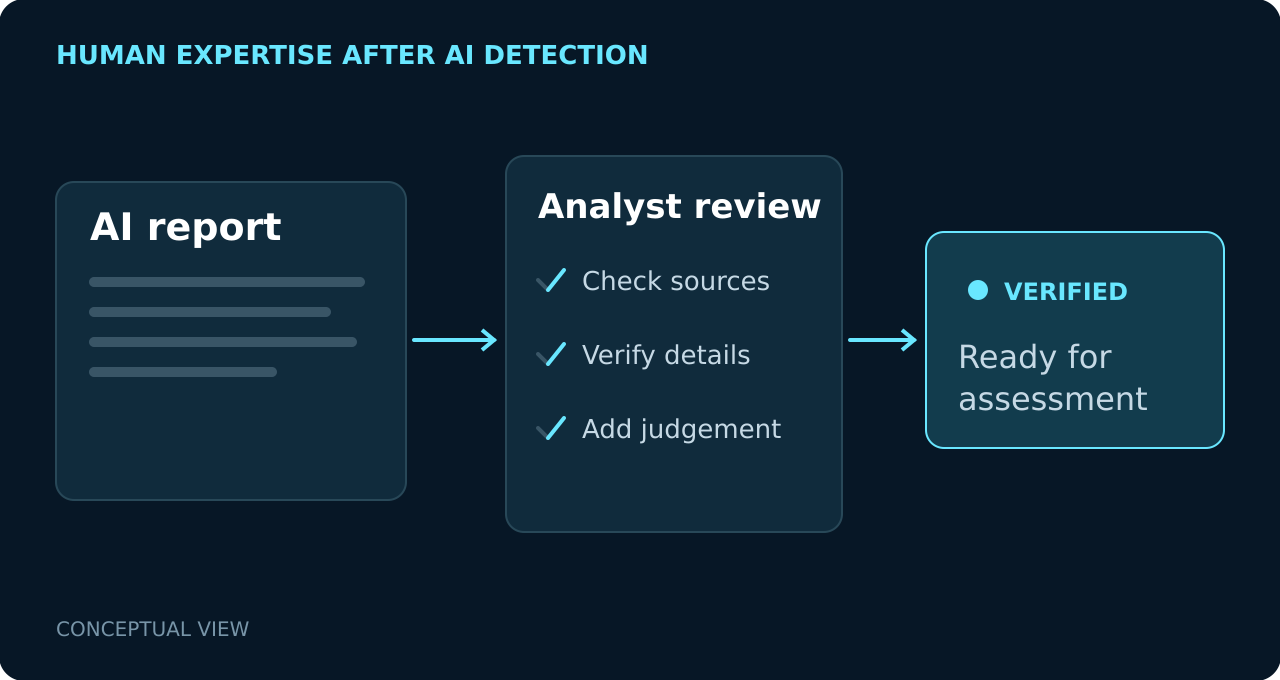
Human analysts assess sources and check incident details for greater confidence.
Assess sources✓Verify event details✓Confirm time & location✓ - 03
AI Analyst turns reports into intelligence briefings for your team to review and refine.
Key developmentsImplicationsAI-generated draft · Analyst judgement - 04
Share intelligence with your team and connect it to your operational tools.
PDFEmail alertsAPI
Keep pace with
a world that never stops.
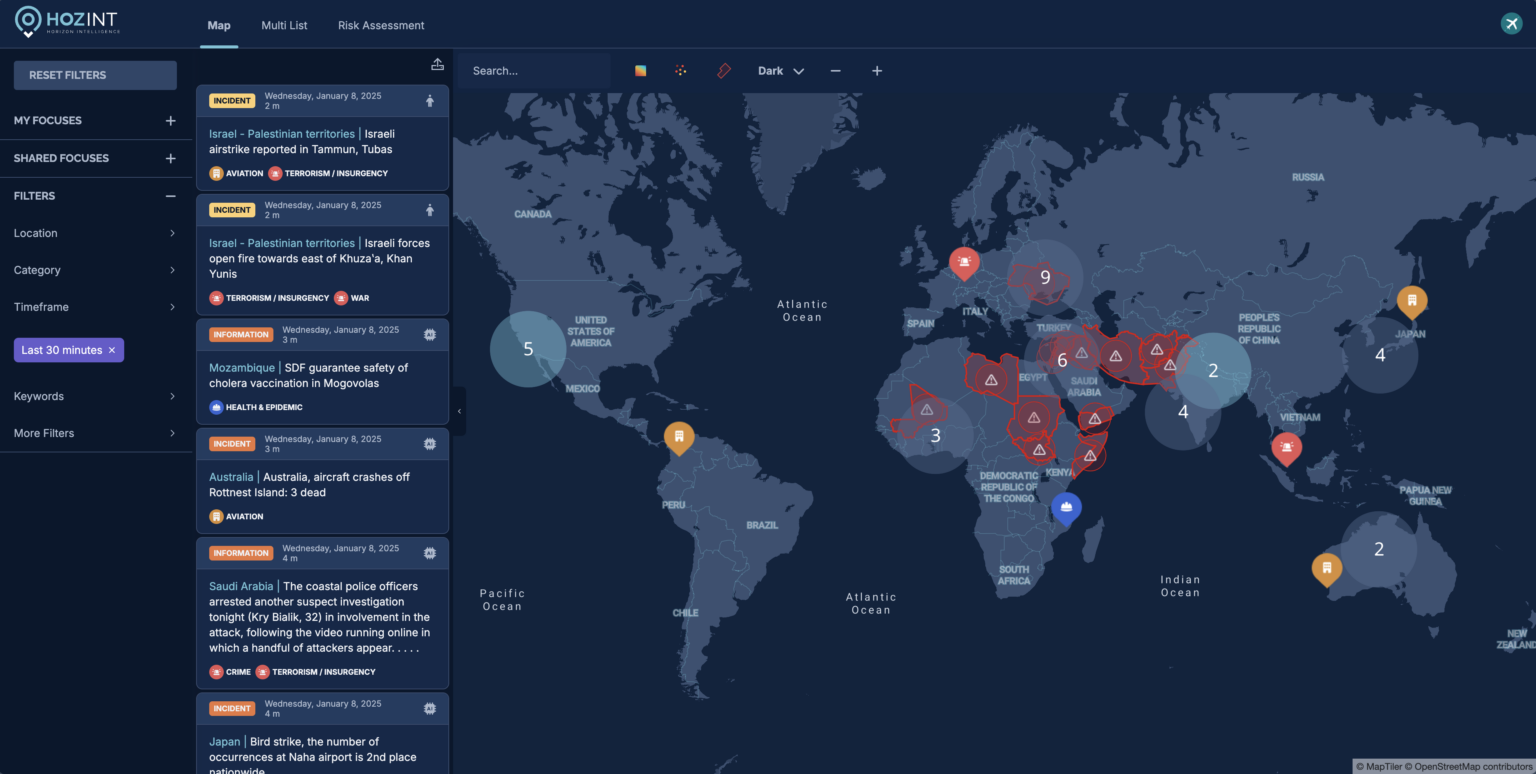
AI monitors open sources and turns relevant developments into structured situational reports. Follow emerging incidents and planned disruptions through a continuous flow of information.
Monitor new disruptions across your areas of interest, then prioritise the developments that need closer review.
Cover more, with greater granularity
Expand your monitoring across locations, topics and sources to capture more of the details that matter.
Receive alerts faster
Near-real-time AI alerts bring emerging incidents to your attention sooner.
Reduce manual information gathering
Let Hozint AI turn incoming information into structured reports, freeing your team to prioritise relevant developments.
Confidence starts with
information you can trust.
Human analysts fact-check information identified by AI, giving your team a verified feed of security developments to assess and act on.
Prepare an operational update using analyst-verified alerts from the locations you monitor.
Spend less time checking
Reduce the work of validating individual reports before escalating them.
Brief with greater confidence
Build your updates around information that has passed through analyst review.
Focus your expertise
Put more time into assessing consequences for your organisation.
From a stream of reports
to a coherent assessment.
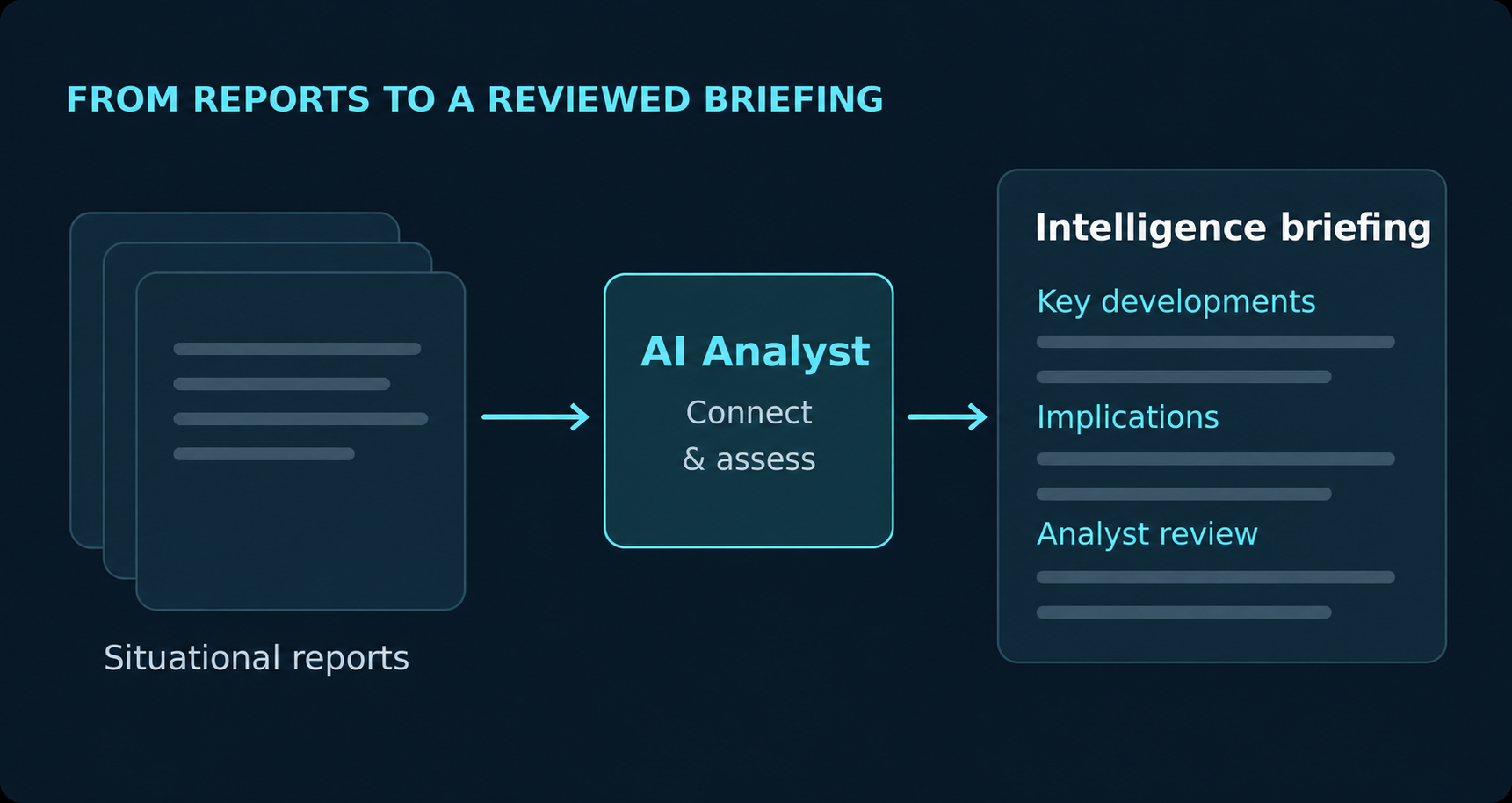
AI Analyst brings large volumes of situational reports together into structured intelligence briefings, using Hozint’s data, methodology and contextual knowledge base. Your analysts review, refine and add their judgement.
Turn a collection of situational reports into a first-draft security briefing for your team to review.
Turn reports into briefings faster
Spend less time working through individual reports: AI Analyst analyses them and generates an intelligence briefing for you.
Spend less time drafting, more refining
Start with an AI-generated draft, then focus your expertise on refining the assessment, adding context and applying judgement.
Compress the intelligence cycle
Automate the analysis of situational reports to shorten the journey from incoming information to a briefing ready for analyst review.
Make patterns visible.
Make findings easier to share.
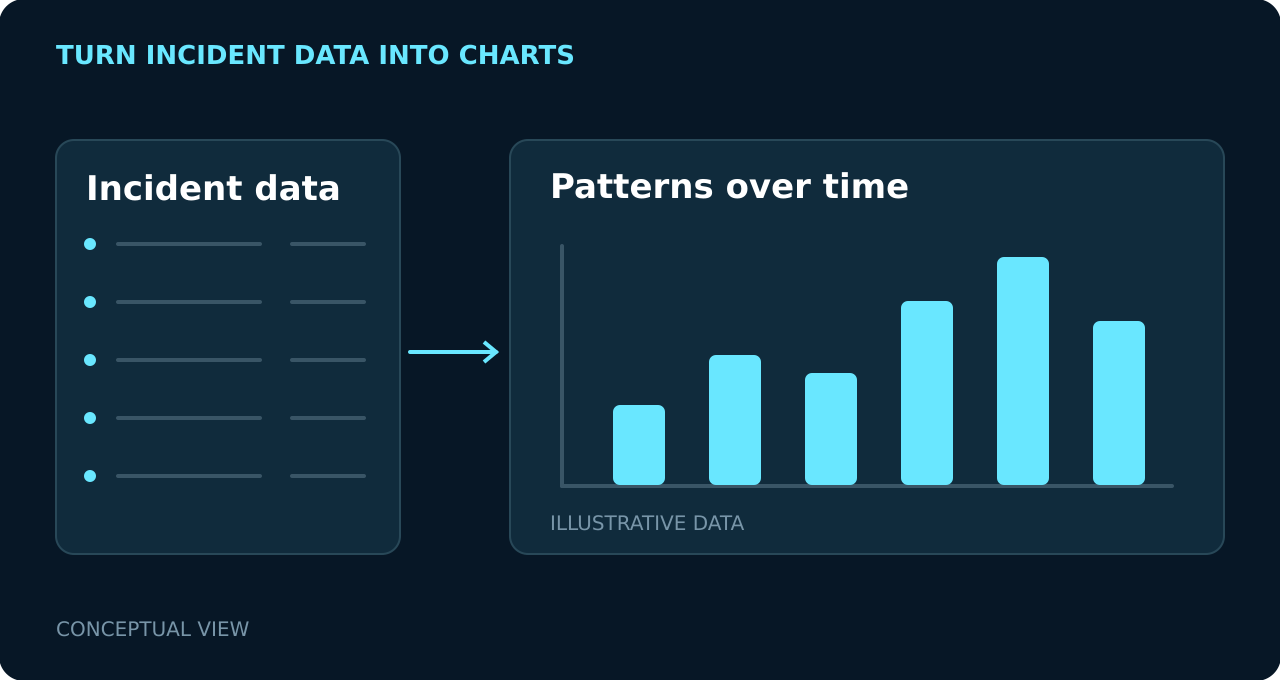
Transform incident data into charts that help you explore patterns, compare developments and communicate findings. Give your audience a clearer view of the data behind your assessment.
Use a chart to explain an emerging incident pattern alongside your assessment of what it means.
Move beyond individual incidents
Use visual summaries to see patterns across a larger set of reports.
Compare at a glance
Make differences and changes in the data easier to interpret.
Communicate with clarity
Support briefings with charts that make your findings easier to follow.
Put the risks around
your operations in focus.
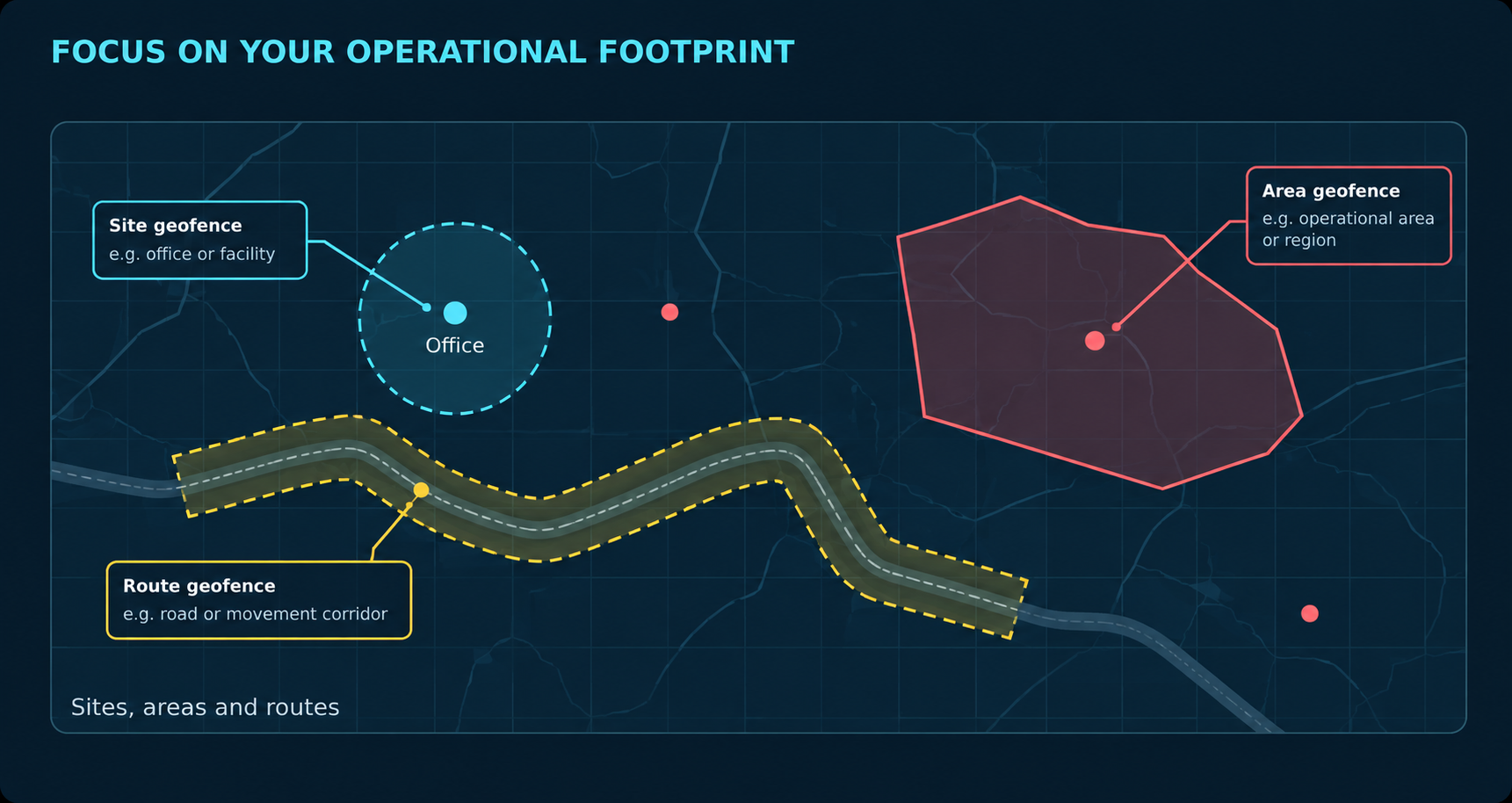
Create radial, polygon or line geofences to monitor specific areas, routes, borders and itineraries. Combine them with your assets and points of interest to focus on developments nearby.
Monitor the area around an office and the route used to reach it with geofences tailored to each.
Monitor what is relevant
Focus on the places and routes that matter to your organisation.
Connect incidents to exposure
See developments in the context of offices, airports, hotels or suppliers.
Prepare for disruption
Spot events near a site or along a route so your team can assess its options.
All your Focuses.
One monitoring screen.
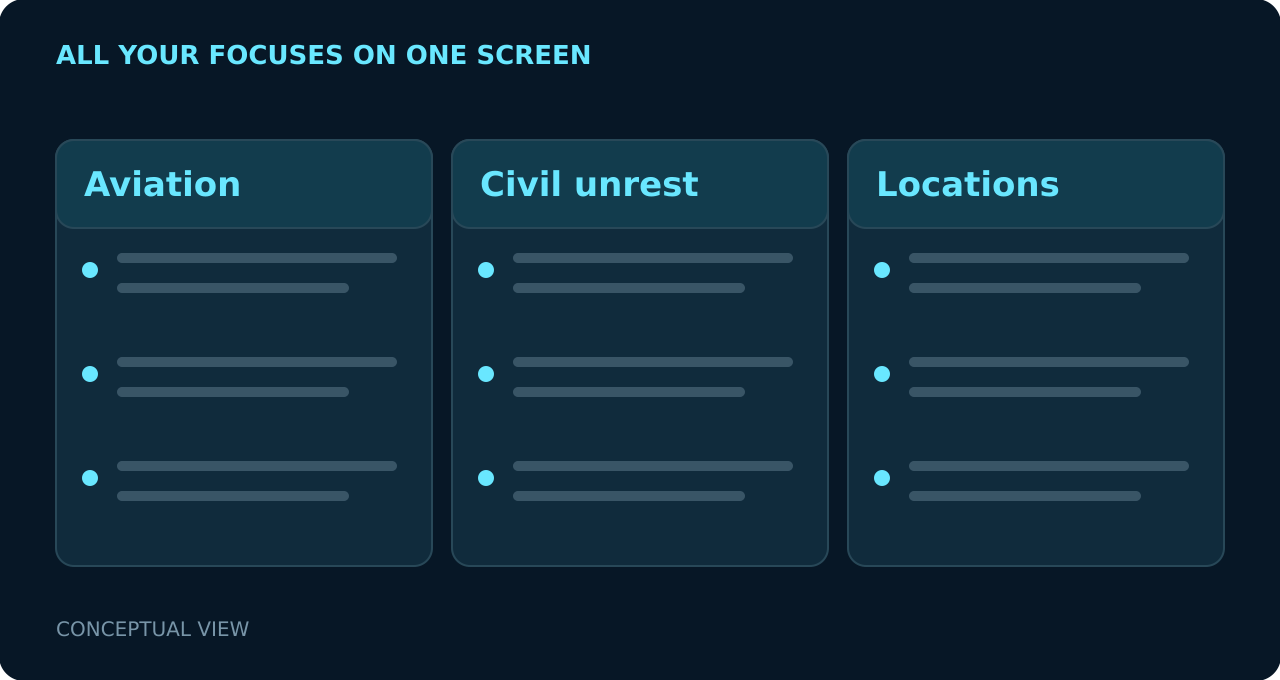
Monitor all your saved filters, called Focuses, on one screen. Each list shows the reports matching a Focus, keeping different locations, incident categories and operational priorities visible side by side.
Bring your aviation, civil unrest and operating-location Focuses together in separate lists on one screen.
Keep parallel watch
Monitor all your Focuses side by side, with a dedicated list for each saved filter.
Prioritise attention
Scan developments across your Focuses and identify where to look next.
Reduce context switching
Follow developments across your saved filters without switching between separate views.
Add country context
to your next decision.
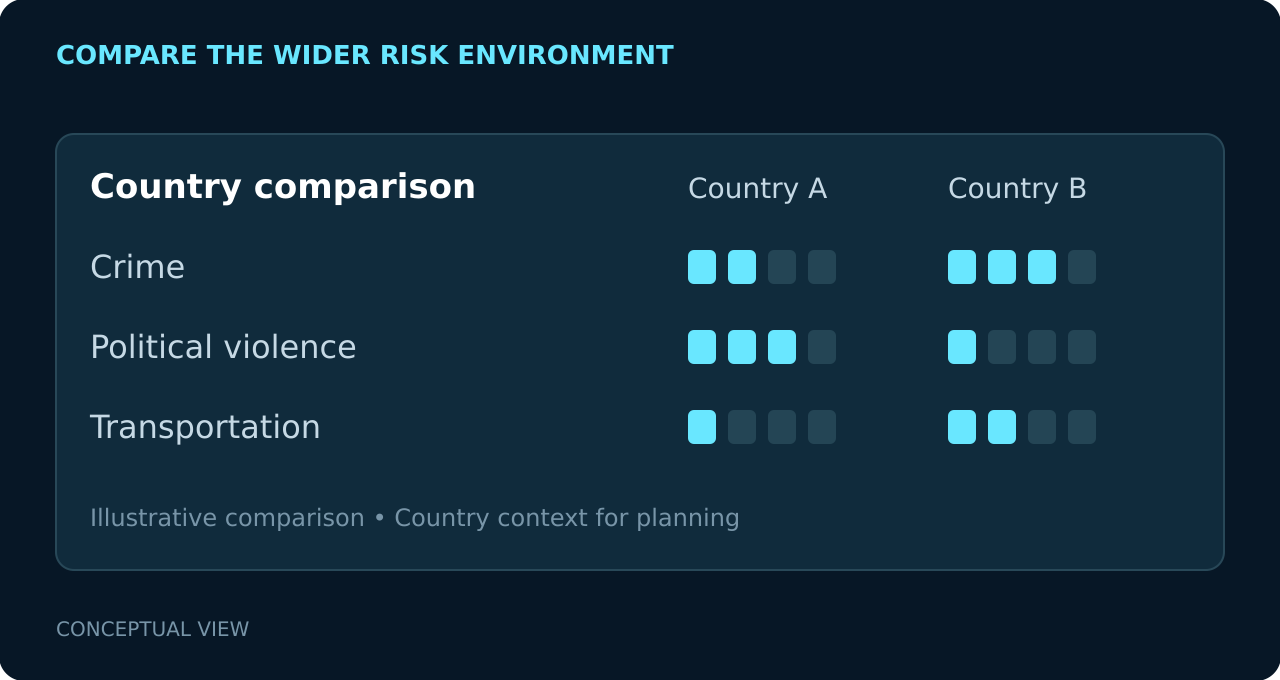
Access country risk assessments covering travel security, terrorism, crime, political violence, health, natural hazards and transportation. Compare countries to understand their relative risk levels.
Compare the risk environments of potential destinations before preparing a travel-security briefing.
Plan with context
Consider the wider risk environment alongside current developments.
Compare destinations
Evaluate relative country risk when considering travel or operations.
Support preparation
Use the assessment to inform briefings, precautions and further analysis.
Your priorities.
Your intelligence workflow.
Let’s explore how Hozint can support your team.