Key points
- On 25 April, JNIM-FLA launched a broad coordinated attack cycle targeting military and aviation-linked sites, including Kati, Modibo Keïta International Airport in Bamako, Mopti/Sevaré Airport, Gao airport/army camp, and Kidal.
- Kati was a key escalation point, with reporting indicating at least 23 people, including civilians and soldiers, were killed. The Defence Minister was also killed in the attack in Kati.
- FAMa responded with airstrikes before and after the offensive, including reported strikes in Koulikoro and Mopti regions and a 26 April strike near Kolokani targeting a motorcycle column allegedly moving westward.
- Territorial pressure intensified after clashes in Kidal on 26 April and reported Malian-Russian withdrawals from Kidal on 27–28 April, while JNIM also claimed Malian forces withdrew from Tessit in Gao region.
- Travel risk is high, with the US Embassy warning on 28 April of possible terrorist movements in Bamako and advising shelter-in-place measures, while the UK advised against all travel to Mali and urged departure by commercial flight where possible.
Coordinated attacks from April 25
The April 25 offensive was the central trigger event and marked a significant escalation in both geographic scope and target selection. Reporting indicates that armed groups launched simultaneous or near-simultaneous attacks against military positions across Mali, including Kati near Bamako, Modibo Keïta International Airport, Mopti/Sevaré Airport, Gao airport and army camp, and Kidal. The pattern suggests an attempt to stretch Malian security forces across the capital area, central Mali, and the northern theatre, rather than a single isolated raid.
Kati was the most politically sensitive attack site because of its proximity to Bamako and its military significance. Reporting stated that the attack began around 05:00 local time with explosions near the Defence Minister’s residence, followed by gunfire near the police station and the Kati military camp; additional reporting alleged the use of an VBIED and armed drones. At least 23 people, including the Defence Minister, were later reported killed in Kati, making it one of the most lethal confirmed incidents in the attack cycle.
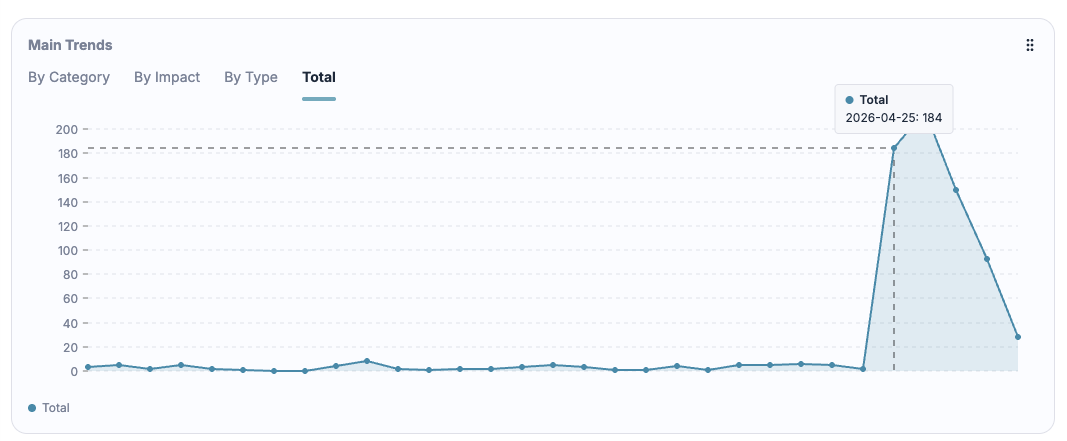
Terrorism-related reports in Mali in the period March 30 – April 29, 2026
Military response
FAMa’s response has relied heavily on airpower to disrupt militant mobility and concentration. Before the April 25 offensive, FAMa reported airstrikes on April 22 in Zantiguila, Koulikoro, which allegedly neutralised at least 70 militants and destroyed equipment, while separate reporting on Apri 23 claimed a FAMa strike killed at least 60 militants at a hideout in Dioura, Mopti. After the April 25 attacks, FAMa claimed that more
than 100 militants were neutralised in airstrikes near Kolokani, Koulikoro, targeting a motorcycle column heading west of the town.
These strikes show that Malian forces retain some capacity to detect and strike mobile formations, but they have not prevented JNIM-FLA from conducting dispersed, multi-location operations. The fact that attacks occurred near Bamako airport, Kati, Gao, Mopti, and Kidal after earlier air operations indicates that militant networks remain capable of synchronising attacks across multiple theatres. The immediate military challenge is
therefore not only killing fighters in transit, but also protecting fixed military sites, airports, and urban access routes from simultaneous pressure.
Territorial pressures
Territorial pressure is most visible in the northern and central theatres. In Kidal, fighting resumed on April 26 as the army clashed with rebels, and later reporting stated that Malian-Russian forces withdrew from Kidal on April 27–28. Russia’s Africa Corps and the Russian Ministry of Defence reportedly confirmed the withdrawal, while an FLA spokesperson said the exit followed an agreement for a peaceful withdrawal. Separately,
JNIM claimed Malian soldiers began withdrawing from Tessit, Gao region, after fighting from April 25–26, with soldiers reportedly permitted to hand over weapons and withdraw safely.
The territorial picture is also contested in central Mali. JNIM reportedly attacked Mopti Airport in Sevaré and took control of military positions there, while later reporting claimed JNIM had taken control of Mopti city. In Gao, residents reported gunfire and explosions from the army camp and airport area, and later reporting claimed JNIM took control of military sites in the city. These claims require continued verification, but the pattern
indicates pressure on state positions across multiple regions rather than isolated insecurity.
Travel disruptions
Travel and operational disruption risk is high, particularly around airports, intercity routes, and urban movement in Bamako. The attack cycle involved gunfire near Modibo Keïta International Airport, an attack on Mopti Airport, gunfire from the Gao airport area, and two
reported explosions near the Bamako airport zone on April 27. Although the UK stated Bamako’s international airport was open and commercial flights were operating, it advised British nationals to leave by commercial flight if safe to do so and warned against overland
exit routes.
Movement restrictions are already being imposed. Gao introduced a curfew from 19:30 to 06:00 following JNIM and FLA attacks, while Koutiala in Sikasso region imposed a 20:00–06:00 curfew until May 26 due to the deteriorating security environment. The US Embassy’s April 28 alert warning of possible terrorist movements in Bamako, forced school closures, and shelter-in-place advice reinforces the assessment that travel risk is not limited to remote areas. The Embassy of India also advised citizens to remain vigilant, stay indoors, follow Malian authority instructions, and maintain contact with the embassy.
Future outlook
In the immediate term, further short-duration attacks, armed probes, explosions, curfews, school closures, airport access restrictions, and checkpoint expansion are plausible, particularly in Bamako, Gao, Mopti/Sevaré, Kidal, and towns along key overland routes. JNIM’s April 28 declaration of a “siege” of Bamako is likely intended to magnify psychological pressure and discourage movement, but the warning coincided with diplomatic alerts and school closures, giving it operational relevance even if the group cannot fully encircle the capital.
The most likely scenario over the coming days is continued insecurity through intermittent attacks, security-force operations, and mobility restrictions rather than a rapid stabilisation. The highest-impact scenario would involve renewed attacks near Bamako’s airport or coordinated assaults against additional military camps, which could disrupt commercial aviation, delay evacuations, and further reduce confidence in state control. Personnel in Mali should shelter during active alerts, avoid non-essential movement, verify flight status directly with carriers, avoid overland inter-regional travel, and maintain redundant communications with embassies, employers, and local security contacts.